
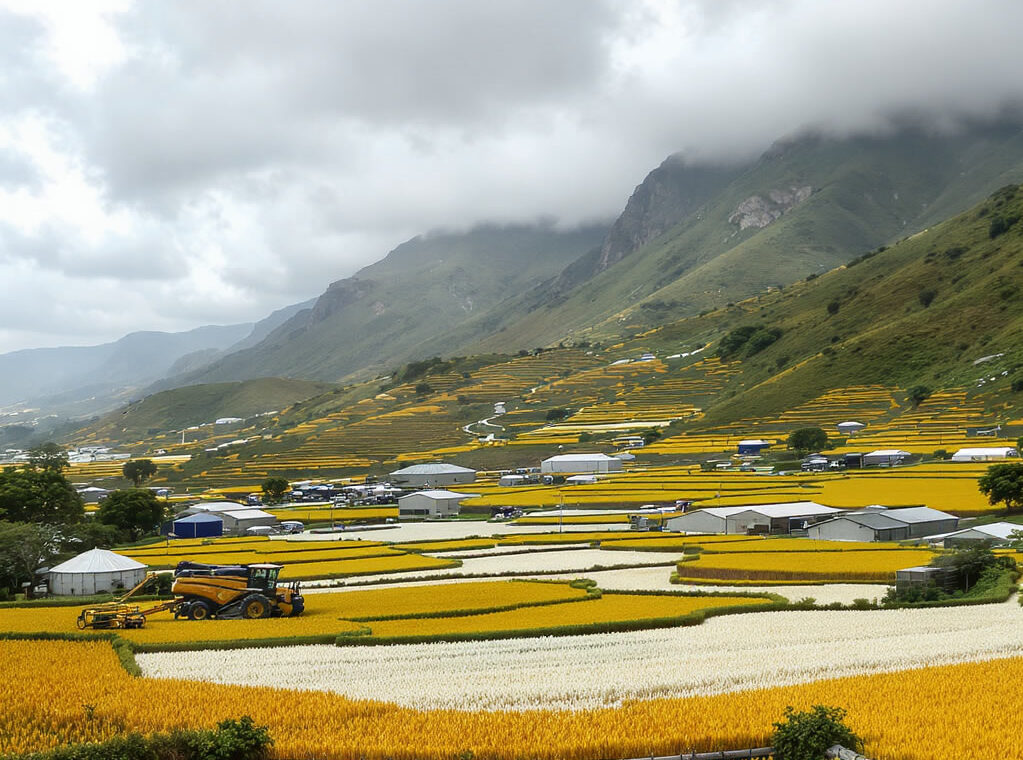
The future of industrial farming is bright as global food demand continues to increase, and the agricultural industry is expanding into large industrial operations due to the impact of climate change on arable land.
Technological innovation and best practices are driving high-yield farming to the forefront of this expansion.
Africa is home to 60% of the world’s remaining arable, uncultivated land, making it a highly sought-after landscape for the future of agriculture and minerals. The continent’s vast potential underscores its significance in the evolution of agricultural practices on a global scale.
The need for large-scale industrial farming practices is urgent, especially considering that in 2021, 2.3 billion people experienced moderate to severe food insecurity, with nearly 924 million facing severe food insecurity. As the global population is projected to reach 9.8 billion by 2050, the strain on food supplies will be significantly amplified, with demand expected to surge by 60%.
We focus on rice production in Mozambique, with a plan to designate 10,000 hectares for farming and processing. The goal is to produce 50,000 tons of rice annually, generating revenue of $25M-$30M. By meeting national demand and focusing on exports, the project aims to address the rising consumption of rice in Mozambique and reduce the country’s reliance on imports.
Project II aims to boost the dairy sector in Mozambique by creating a 20,000 dairy cow farm with integrated technology for on-site processing and distribution. The project will focus on producing milk to powder for formula and fresh milk for local and international markets. With 5,000 hectares designated for dairy farming, the project aims to fill the gap in Mozambique’s national supply of milk and reduce the country’s dependence on dairy imports.

